
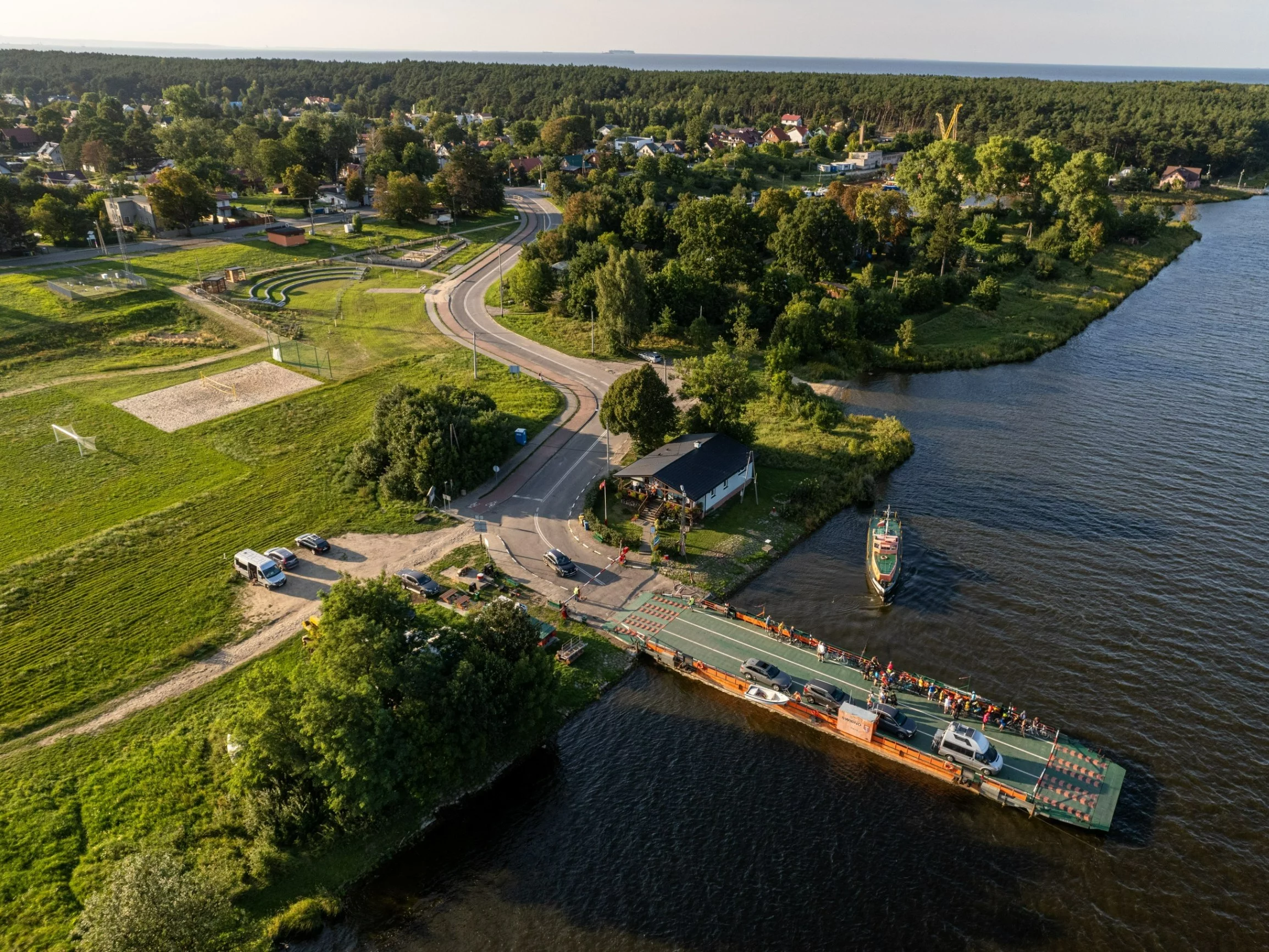
Starting May 1, the ferry from Gdańsk's Świbno to Mikoszewo in the Stegna municipality will resume operations. This is a convenient and quick way to travel from Gdańsk towards Krynica Morska, shortening the route by 23 kilometers
Nowoczesny prom z 2006 roku może przewozić do 21 samochodów i około 100 pasażerów
Rates and Discounts
Payment for the crossing can be made in cash, by card directly on board, or online. Discounts are available for permanent residents of Sobieszewo Island and the Stegna municipality — 50% with the presentation of the appropriate identification
Approximate rates for the 2026 season:
— car — 30 zlotys (for locals — 15 zlotys, passengers included);
— camper or minibus — 35 zlotys (for locals — 17.5 zlotys);
— motorcycle — 15 zlotys (for locals — 7.5 zlotys);
— bicycle — 10 zlotys (for locals — 5 zlotys);
— pedestrian — 5 zlotys (for locals — 2.5 zlotys);
— bus — 200 zlotys (for locals — 100 zlotys);
— freight transport and trailers are charged at separate rates.
Schedule
Od 1 maja do 30 września prom kursuje codziennie od 7:00 do 21:00. W standardowych warunkach, odpływy odbywają się co 30 minut. Jednak w godzinach szczytu prom kursuje bez przerwy, aby przewieźć wszystkich zainteresowanych pasażerów.
Important: the specified time is the departure from Świbno. After arriving in Mikoszewo, the ferry immediately returns, without waiting for the next fixed time. If there are no passengers on either side, the trip may be canceled.
History of the Crossing
"Świbno" ferry history
Dziś przeprawa pozostaje nie tylko ważną arterią transportową, ale także częścią lokalnej historii, łącząc brzegi i pokolenia podróżnych.
Source: https://swibnoprom.pl/