A hunger strike has begun at the National Center for the Prevention of Dissocial Behavior (KOZZD) in Chersk. The residents claim they are forced to live in conditions that they believe violate basic human rights. In a letter to the editorial office of "Wyborcza," they describe overcrowding, lack of privacy, and deteriorating living conditions
The KOZZD branch in Chersk has been operating since 2022 and is one of two such institutions in Poland — the main center is located in Gostynin. It houses individuals who, after serving sentences for the most serious crimes, such as murder or sexual offenses, are still deemed dangerous by forensic psychiatrists
The decision to place someone in the center is made by a civil court at the request of the director of the correctional facility
Since the opening of the center in Gostynin and then the branch in Chersk, residents have repeatedly expressed complaints about their detention conditions.
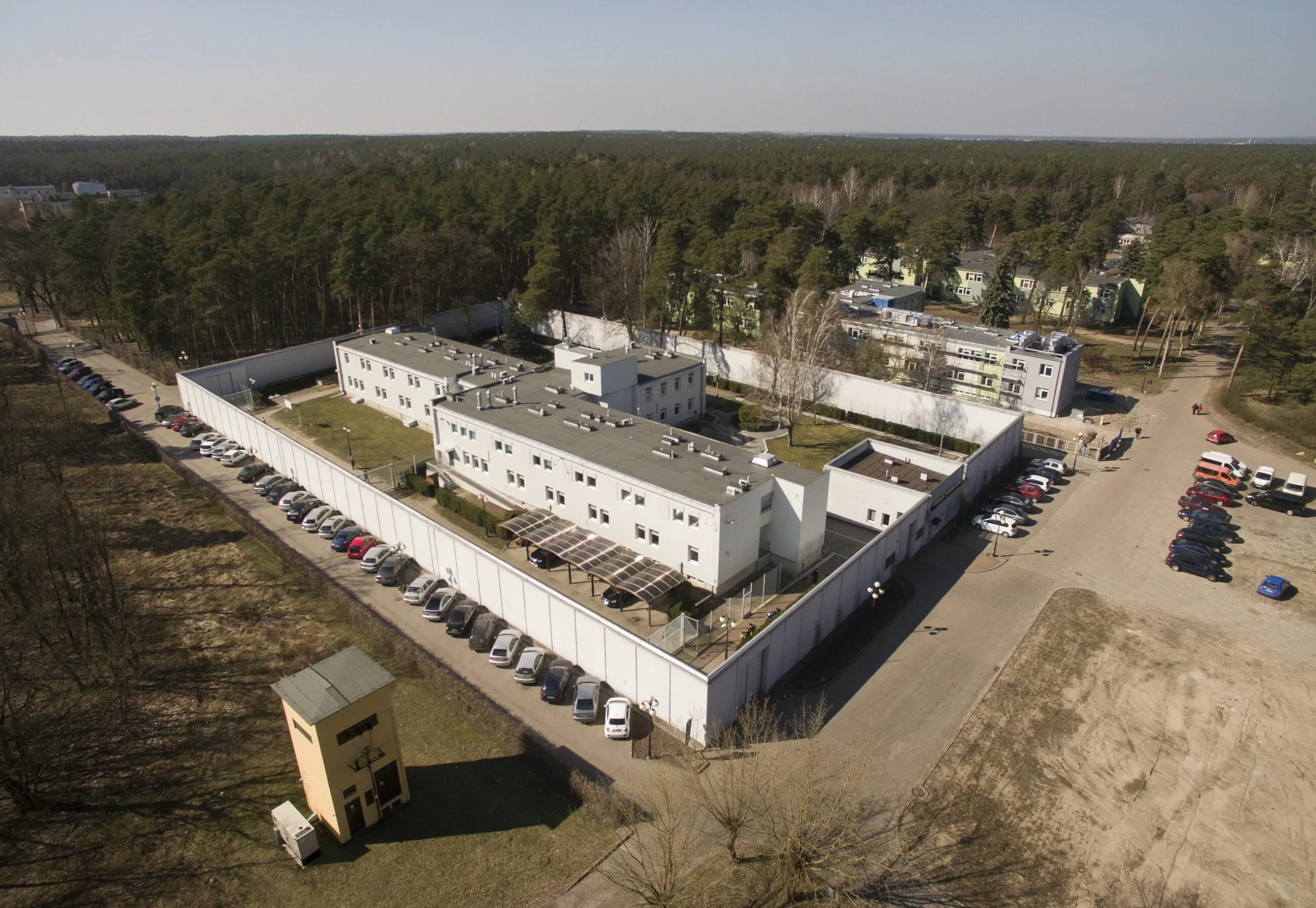
The center in Chersk is located in a former women’s section of a correctional facility in Koronowo. Residents are under constant surveillance — there are 120 surveillance cameras on the premises, and any unauthorized opening of doors triggers an alarm.
On May 5, a letter was received at the editorial office of «Wyborcza,» signed by one of the residents who requested anonymity. He reported that 30 people from the center in Chersk had begun a hunger strike. This information was confirmed by the secretariat of the institution in Gostynin, but the management directed journalists to the press office of the Ministry of Health.
The letter emphasizes that the center is overcrowded, and the psychologists’ offices are being converted into additional cells. Residents complain about the use of bunk beds, pressure from the administration, and lack of response to previously raised demands — despite numerous promises from the ministries of justice and health. The protesters have sent appeals to the relevant ministries, the Ombudsman for Citizens’ Rights, and the management of the center.
Inspections confirm some of the allegations
The conditions complained about by the residents have already been the subject of inspections by government agencies. In 2019, the National Mechanism for the Prevention of Torture at the Office of the Ombudsman for Citizens’ Rights found that overcrowding makes therapy impossible, contributes to increased aggression, and complicates hygiene compliance. In 2023, similar conclusions were reached by the Supreme Audit Office.
Professor Monika Platek, who has been observing the situation at KOZZD for many years, notes in a conversation with «GW» that the hunger strike remains practically the only way for residents to draw attention to their living conditions. According to her, many of them suffer from serious illnesses, some are unable to move independently, and several individuals have already died.
In August of last year, Prof. Platek published a report indicating seven key violations of the rights of residents. Among them are the justification for placement in KOZZD, transparency in the prescription of medications, the need to improve living conditions, and the right to use a mobile phone.
She also noted that some individuals are sent back to the center despite not committing new crimes after their release. There have been documented cases of punishments for minor violations, such as attempts to secure minimal privacy by using towels to cover their space.
One resident had an electric wheelchair, purchased by the family, confiscated, citing the potential danger of the battery and the requirement to charge it outside the cell. According to Prof. Platek, rooms designed for one person can accommodate up to eight people on bunk beds.
Sprawa trafiła do Europejskiego Trybunału Praw Człowieka
Formally, only individuals placed in KOZZD by court decision based on the law can be sent there. However, as Prof. Platek points out, in practice, the center also houses individuals for whom the Supreme Court has overturned the isolation decision
The Ministry of Justice has announced plans to amend the legislation and open a new center with 70 places. However, Prof. Platek emphasizes that the current law allowed for a maximum of 60 places, while more than a hundred people are currently housed in the institutions. She considers the opening of the branch in Chersk a violation of the law.
Currently, around ten cases related to violations of the rights of residents in KOZZD are being considered by the European Court of Human Rights. The maintenance of the center costs the state approximately 134 million zlotys per year