“A country experiencing a deep demographic crisis is building barriers for immigrants who contribute to its economy, science, and culture. Today, even Jagiełło or Batorego would probably not receive Polish citizenship,” says Krzysztof Adam Kowalczyk, an expert and head of the economics department at the newspaper “Rzeczpospolita”
He reminds us that this year marks 205 years since the resettlement of German cloth makers to Zgierz by the decision of the authorities of the Kingdom of Poland. This event became the starting point for the rapid development of the textile industry, including in Łódź. The so-called “Polish Manchester” emerged thanks to a combination of knowledge, labor, and capital — German, Polish, and Jewish.
In the early 19th century, Poland actively attracted specialists from abroad. Today, against the backdrop of technological changes and demographic decline, countries are increasingly competing not only for labor but also for talents capable of stimulating economic growth
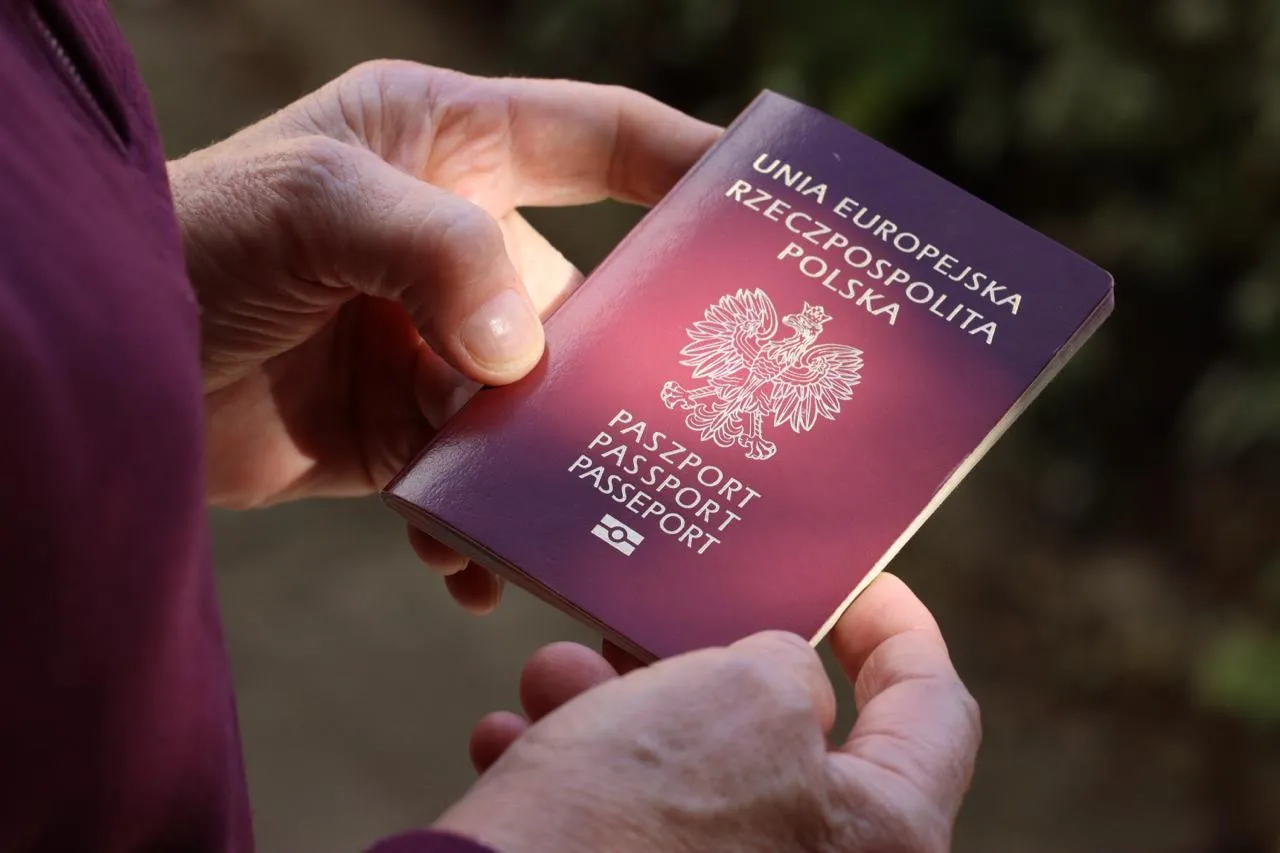
According to the expert, it seems that Poland is increasingly demonstrating to immigrants that even if they want to tie their lives to the country by the Vistula, the path to full membership in society is becoming more complicated. The Ministry of Interior and Administration is working on tightening the rules for obtaining citizenship, and even stricter requirements are proposed by President Nawrocki.
According to these initiatives, the mandatory residence period before applying for citizenship may increase from three to eight years according to the Ministry of Interior and up to ten years according to the president’s proposal. There are also plans to raise the language requirement from level B1 to B2 (Ministry of Interior) or even C1 (president), as well as to introduce an additional exam on Polish history, constitutional values, and the basics of the functioning of the EU.
The question arises: would the Poles themselves be able to meet such requirements?
The expert notes that such regulation of access to citizenship turns it — much like in the conditions of a shortage economy during the times of the People's Republic of Poland — into a hard-to-access “commodity by ration cards.” He also questions whether even native citizens, including politicians advocating for stricter rules, could successfully pass exams on history and the structure of the state. Considering the level of language proficiency in the public space, many would find the language part challenging. Meanwhile, for the school exam in Polish, it is enough to score only 30%
Kowalczyk separately touches on the possible connection between these changes and the growing antipathy towards Ukrainians. In his opinion, the tightening of rules may partially reflect the strengthening of anti-Ukrainian sentiments propagated by nationalist circles. The new requirements could complicate the path to citizenship for refugees, even if they have already obtained permanent residency and decided to stay in Poland. He believes this could be risky for the economy, considering that about 860,000 Ukrainians are already supporting it in the fields of trade, catering, and construction.
In the context of a deepening demographic crisis, which is not compensated by either the 800+ programs or even the hypothetical 1800+, and with the population potentially decreasing from the current 37 million to 28.4 million by 2060, the key task should be not isolation but integration of newcomers, the expert is convinced
He reminds us that Polish history itself is an example of successful integration. The descendants of German cloth makers from Łódź became part of society, as did many outstanding figures of Polish science and culture — from Copernicus and Chopin to Bem, Matejko, Kolberg, Wedel, and Unrug
“It is all the more strange to observe how a country that has given the world such ‘imported’ rulers as Jagiełło and Batorego is today increasingly wary of immigrants. Under current conditions, they would probably not even be able to start the path to citizenship — let alone long-term residence and exams,” concludes Kowalczyk.