
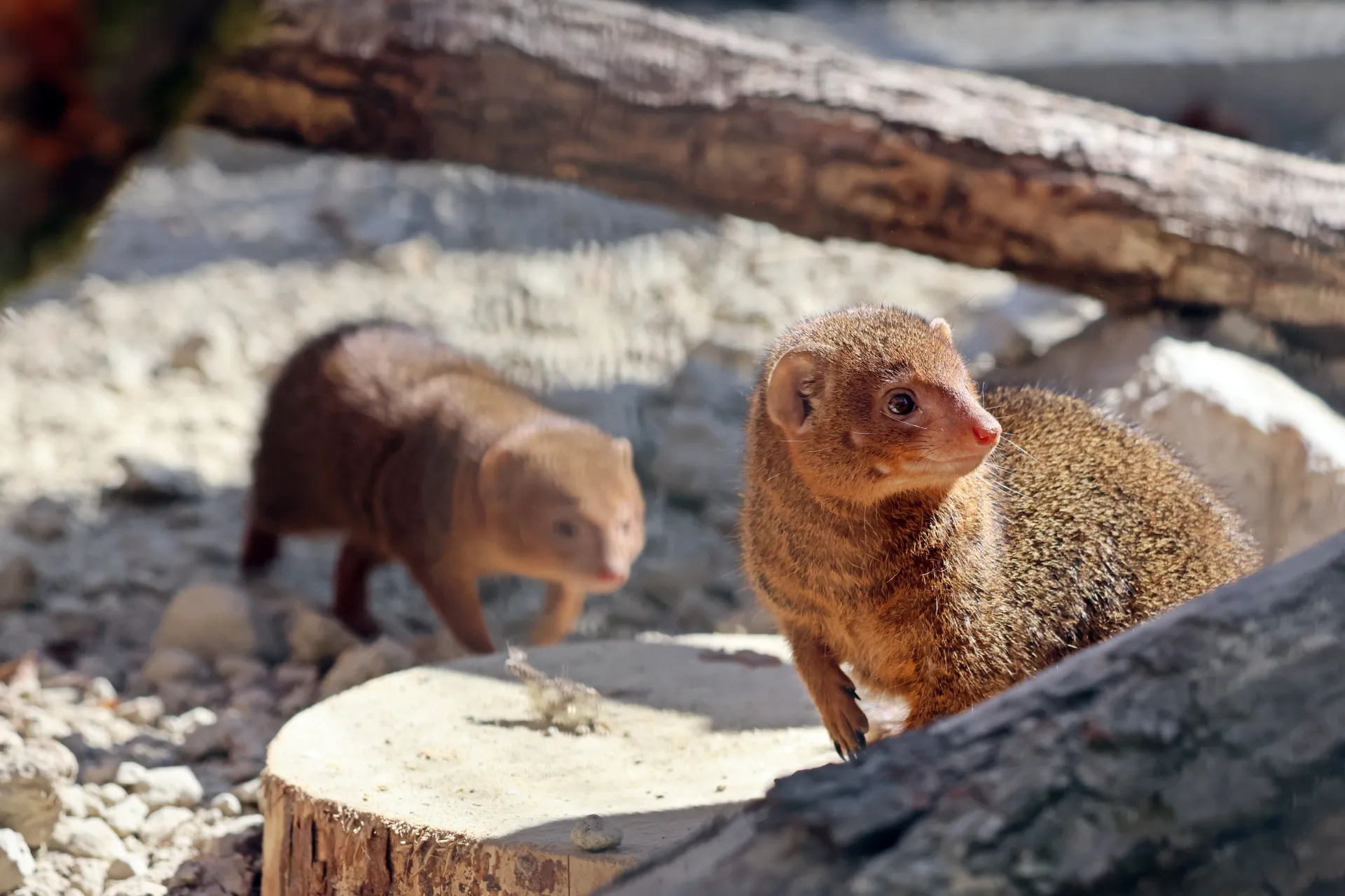
The Gdańsk Zoo has welcomed a new and quite interesting predator — the dwarf mongoose. Despite their tiny weight of around 200 grams, these animals have already attracted the attention of visitors. The new resident is not only miniature but also possesses an extremely unusual social organization, which specialists describe as almost «royal.»
Dwarf mongooses have arrived at the Gdańsk Zoo — the smallest representatives of the mongoose family. These extremely active mammals immediately caught the attention of both staff and guests at the zoo.
— The appearance of dwarf mongooses is a new species for us and an important step in the development of our collection of small predators. Despite their size, this species has very complex social relationships, — says Emilia Salah, the director of the Gdańsk Zoo.
The animals arrived in Gdańsk from the Hof van Eckberge zoo, opening a new chapter in the history of the collection. Although they are among the smallest representatives of their family, their behavior and social organization make them particularly interesting to observe.
In the wild, dwarf mongooses inhabit savannas and semi-desert areas of Africa south of the Sahara. Living in a group is a necessity for them. Their community is strictly hierarchical: only the dominant pair reproduces, while the other group members take on the roles of «nannies» and guards, ensuring the safety and care of the offspring.
— They are extremely active and intelligent animals. They are almost constantly on the move, communicating and interacting with each other, — notes Beata Kuzniar, head of the carnivore section. — Their social ties are complex; they live in family groups, and we received what is known as a «bachelor» group.
The new residents have quickly adapted to the conditions of the zoo. The mongooses are actively exploring their enclosure, displaying typical behavior — constant activity, vigilance, and interest in their surroundings. According to specialists, this is a good sign indicating their successful adaptation.