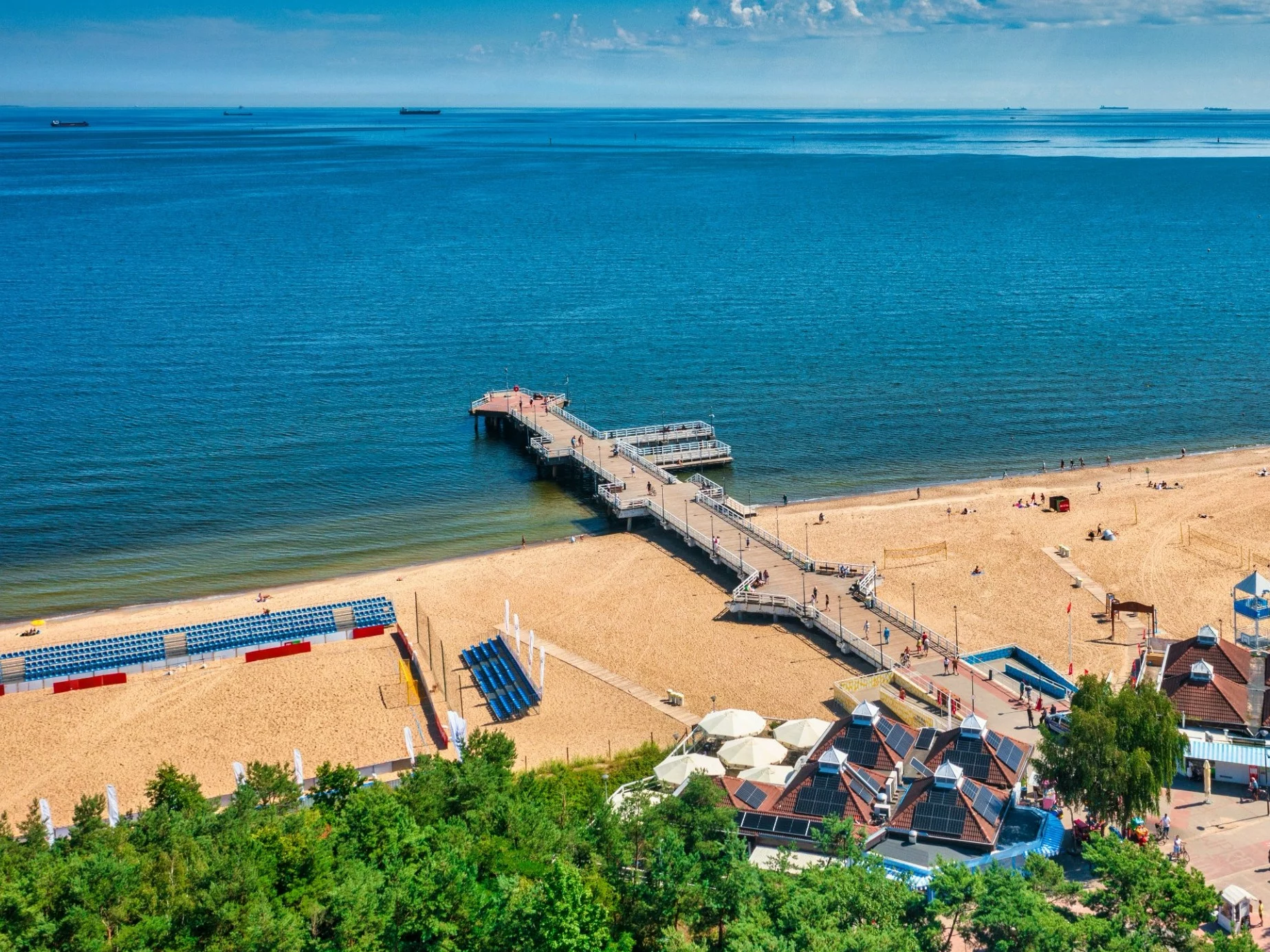
The Baltic Sea coast in the Tricity area features about 40 kilometers of sandy beaches, pine forests, dunes, and promenades. Gdańsk, Sopot, and Gdynia form a unified resort region, where each city offers its own character of relaxation: from calm family beaches to lively resort areas and sports locations
Sopot Beaches
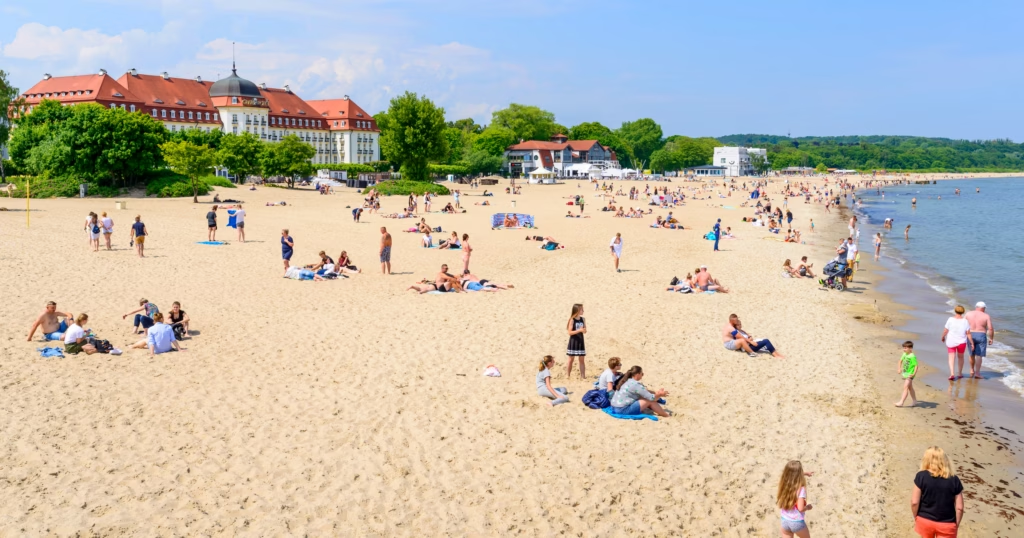
Sopot is the main resort of the region, known for its promenade, pier, and relaxing atmosphere
Features of Sopot beaches:
- wide sandy strip up to 4.5 km
- soft, light sand and gentle entry into the water
- developed infrastructure: bars, cafes, rentals
- high popularity in the season
Central beach by the pier is the busiest, especially in summer. The northern part closer to Gdynia is quieter and suitable for family relaxation and walks.
- Plaża przy molo — piasek, łagodne wejście, wiele płatnych leżaków. Idealna na piękny widok, ale hałaśliwa.
- North of the molo (towards Gdynia) — a bit quieter, still an urban beach with infrastructure
- Południe (w kierunku Gdańska) — mieszanka piasku i kamyków, mniej turystów w dni powszednie.
The best way to get there is by SKM to Sopot Wyścigi or Sopot — a 5–10 minute walk to the sea. Parking in central Sopot in summer is very expensive: 8–15 zł/hour, and spots are scarce.
Sopot is often chosen by those who want to combine the beach with urban life: restaurants, evening walks, and festivals are literally just a few steps from the sea
Gdańsk Beaches
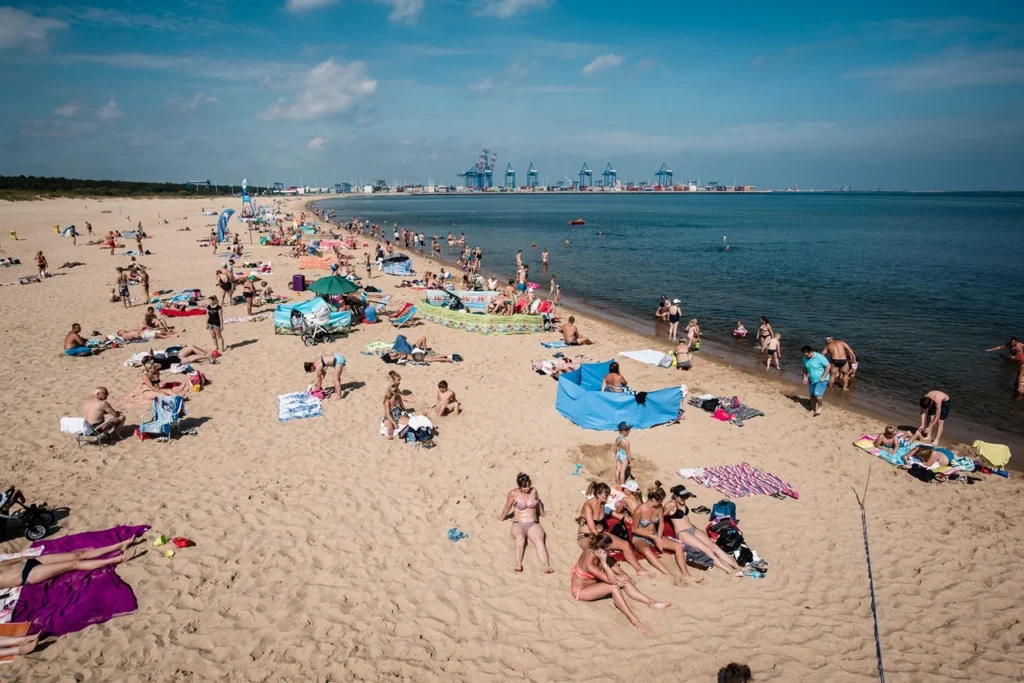
Gdańsk offers the most "wild" and extensive beaches in the Tricity area, with less resort hustle and bustle, more nature and space.
The most popular beaches:
- Stogi — a wide sandy beach with clean water and a nearby pine forest
- Brzeźno — one of the most accessible beaches with a long pier and developed infrastructure
- Jelitkowo — a family beach on the border with Sopot, near Oliwa Park; a combination of beach and greenery
- Sobieszewo / Wyspa Sobieszewska — more natural, less development; takes longer to get there, but quieter
- Nieoficjalna plaża nudystów Stogi — wydzielona strefa dla miłośników odosobnionego relaksu
Plaże Gdańska are often surrounded by dunes and green areas, making them less urbanized and more "natural." In summer, you can find both calm spots and more lively areas near entrances and cafes.
In Gdańsk, it is easier to find free or cheap parking near Stogi and Brzeźno than in Sopot. Look for signs for strefa płatnego parkowania and use the MPA or EasyPark apps.
Gdynia Beaches
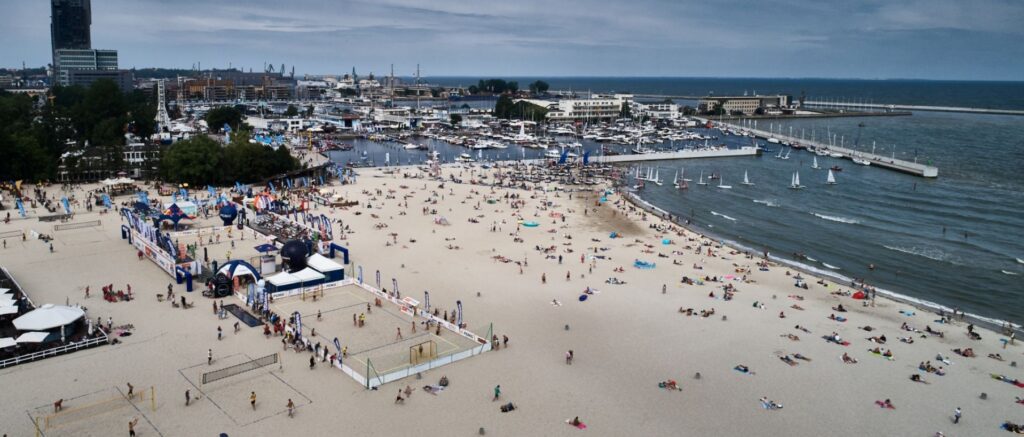
Gdynia offers the most "urban" style of beach relaxation.
The main beach is Plaża Śródmieście (Central Beach): located right in the city center, near museums and the promenade, well-equipped for families and active recreation, and often hosts events.
Redłowo — one of the most picturesque beaches in Gdynia. It is located next to the Kępa Redłowska nature reserve and the famous cliff.
Orłowo — the most beautiful and photogenic beach in Gdynia. It features the famous Orłowski cliff and a wooden pier.
Babie Doły — the most «wild» beach in the city, located in the north of Gdynia, near military facilities and a former torpedo station. This is the quietest beach in the city, usually visited for peace and long walks by the water.
Gdynia is ideal for those who want to stay close to urban infrastructure while enjoying a day by the sea.
The easiest way to get to Gdynia is by SKM train; the journey from the center of Gdańsk takes about 30–40 minutes, and tickets can be purchased from machines or through the Jakdojade and KOLEO apps. Within the city, buses and trolleybuses from ZKM, as well as taxis, conveniently reach the beaches. From Gdańsk Airport, the journey usually takes about an hour with a transfer to SKM in Wrzeszcz.
Rules on Polish Beaches
- Rescue flags — white/green — swimming allowed; red — prohibited; yellow — caution
- Alcohol — prohibited on most urban beaches, fines possible
- Grilling and fire — grilling is prohibited, barbecues only in designated areas
- Dogs — seasonal ban on some beaches (signs zakaz wprowadzania psów); off-season rules are more lenient
- Śmieci — mandaty za zostawianie plastiku; kosze znajdują się przy wejściach, na plaży jest ich mało — zabierz swoje śmieci ze sobą.
- Volume of music — loudspeakers at full volume are not welcome
Currents near the molo and breakwaters are dangerous — do not swim beyond the buoys and do not dive from the pier if prohibited by a sign
Parking by the Sea and How Not to Overpay
In summer, parking near the Tricity beaches becomes a major source of stress. The most reliable strategy is to leave the car far from the coast and take public transport: SKM + walking is the best option for Sopot and central Brzeźno. A good alternative is P+R at SKM stations (e.g., Gdańsk Oliwa or Gdynia Chylonia), where you can leave your car and then comfortably travel by train.
Jeśli nadal zdecydujesz się na jazdę, najlepiej przyjechać przed 9:00 rano — rano jest jeszcze szansa znaleźć miejsce w pobliżu Brzeźna lub Stogów, później parking szybko się zapełnia. Na obrzeżach miasta płatny parking kosztuje około 20–40 zł za dzień, ale w centrum Sopotu ceny są znacznie wyższe. Ważne jest również, aby nie zostawiać samochodu na trawnikach lub pasach autobusowych — to prawie gwarantowany mandat i holowanie. Alternatywą latem jest rower lub hulajnoga elektryczna.
What to Bring to the Beach
At urban beaches, you can rent sunbeds and umbrellas at rental points, but in the season, they are quickly taken, so bringing your own umbrella is often more convenient. Showers and toilets are available at most official beaches, but there can be queues during the day. It’s better to bring drinking water with you — drinking fountains are rare.
In Orłowo and some parts of Sopot, footwear for rocky shores may be useful. Many open-air events also take place in summer — it's worth checking festival posters by the sea
Weather and Safety
The Baltic Sea is cooler than southern resorts: in summer, water temperatures usually range from +18 to +22 °C. In case of a thunderstorm, you should immediately exit the water. Sometimes algae appear — if the water is green or there are official warnings, swimming is prohibited.
Ratownicy WOPR i punkty pierwszej pomocy działają na plażach, a numer alarmowy to 112. Silne wiatry mogą szybko zmienić warunki: podczas burzy w Sopocie może być niebezpiecznie na molo, podczas gdy w rejonie Stogi fale są często spokojniejsze.
Season and When to Go
Szczyt sezonu przypada na lipiec i pierwszą połowę sierpnia: plaże są zatłoczone, parking jest drogi, a noclegi w Sopocie trzeba rezerwować z wyprzedzeniem. Dla bardziej spokojnego doświadczenia lepiej wybrać dni powszednie lub wrzesień — morze jest nadal ciepłe, a ludzi mniej. W maju i czerwcu woda jest chłodna (+14 do +16 °C), ale idealna na spacery. Przed podróżą warto sprawdzić prognozę wiatru w aplikacjach — ma to duży wpływ na komfort pobytu.
This material is for informational purposes only. Swimming and parking rules may change at the discretion of the gmina. Keep an eye on WOPR and straż miejska announcements. Updated: June 2026.