Denis and Veronika — a brother and sister from Belarus — live in Gdynia and work in the local ports. Denis has progressed from a worker — a stevedore — to a foreman, while Veronika has been working as a dispatcher for over two years. They told MOST how they got into this field, how much one can earn in Polish ports, and why they have helped ten acquaintances find jobs.
Denis is 21 years old. He came to Poland in 2023 with his family. A few months later, the young man turned 18 — and on that very day, he got a job. He first worked in a chain of grocery stores, then in the municipal service. Later, an acquaintance invited him to work at the port. At first, the Belarusian thought it was about a shipyard and wanted to decline.
— Słyszałem od wielu osób, że to trochę niewolnicza praca, brudna robota. Moi znajomi, którzy pracowali jako szlifierze, mieli problemy z płucami. Nie chciałem tam iść, — mówi Białorusin.
However, it turned out that it is specifically about the unloading and loading of ships.
«You just had to move a lot»
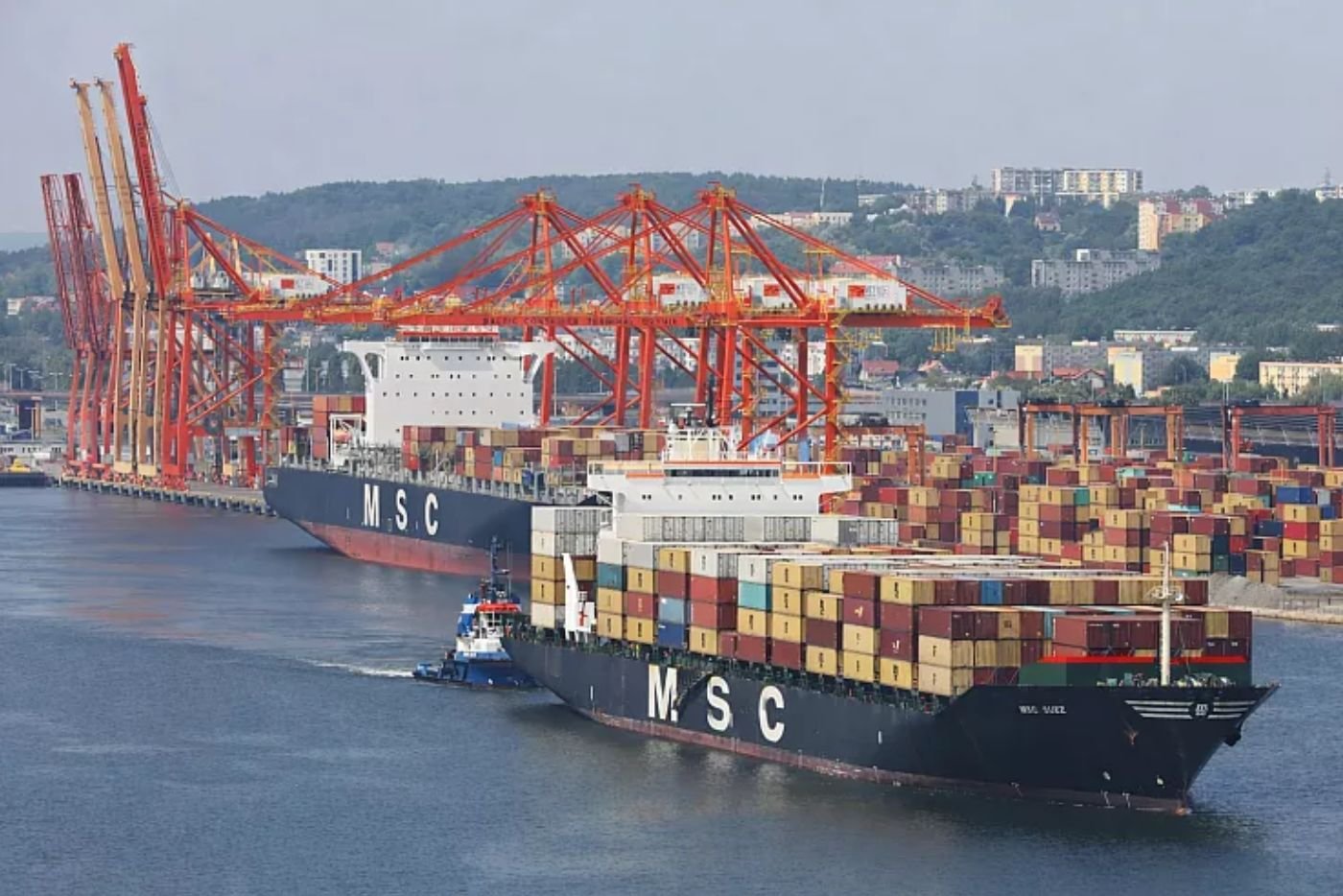
Through a brokerage firm, Denis got a job as a stevedore — a port worker whose duties include loading, unloading, and safely stowing container cargo on ships. The schedule was flexible — depending on the arrival times of the ships. Shifts usually lasted eight or 12 hours, but sometimes there were also «unusual» ones — lasting four hours or until the servicing of a specific vessel was completed.
The physical work for Denis turned out to be not difficult — «it just required a lot of movement.» This was not a problem: previously, the young man was a professional athlete, and during his emigration, he maintained his fitness in the gym.
— There are holes in the corners of the containers where locks are inserted (corner fittings. — Note from MOST). These locks secure the containers on the ship so that they do not fall during transport and storms, — describes the specifics of the work of a Belarusian. — I was going around, making these fastenings or, on the contrary, dismantling them. This was one of the main tasks.
At that time, Denis was studying in a vocational school, and as a student, he could expect a higher rate due to tax benefits. On average, his monthly income was 5-6 thousand zlotys.
«I saw how he tore off fingers»
After nine months, Denis was offered a promotion — to lukowy. For this, the Belarusian underwent a one-day training, passed a test, and received a confirming document. According to him, it was not difficult: he already knew the specifics of the new job well, often communicated with the lukowy workers, and was interested in the nuances.
— The hatch is the operator’s eyes. You stand on the ship or under the ship and give commands, — explains the Belarusian. — It’s a big responsibility: you need to monitor the equipment, know the tonnage of the cargo and how much the attachments can hold. There are containers of specific sizes — you have to come up with ways to hook them. Plus, you are responsible for the safety of people. And during this time, I’ve seen a lot in the port: like fingers getting torn off, for example.
The salary of a Belarusian in the new position has increased to 6-8 thousand zlotys per month. The final amount depended on the number of hours worked and bonuses for unloading certain cargoes.
«20 tons flying overhead»
Recently, Denis was promoted again. At just 21 years old, the young man became a foreman. Now he has even more responsibilities. He organizes the work of the team, assigns tasks to the workers, prepares and submits reports on employees’ working hours, and trains newcomers.
— 80% of new employees need to be guided by the hand, everything explained and shown. They have no idea where they are. There are 20 tons flying above their heads, and if it, God forbid, falls, nothing will be left of you. And I will be responsible for the person, — says Denis.
Obecnie pracuje na nocne zmiany — od szóstej wieczorem do szóstej rano.
In his busiest month, he worked 298 hours and earned around 12,000 zlotys
“He apologized and almost cried”
Denis has workers of various ages under his supervision. According to him, the oldest is about 58 years old. The young man says that he has good relationships with his colleagues and that there have been no open conflicts. He admits that sometimes he does not hesitate to raise his voice if he feels he is not being heard.
Regarding the fact that he is a foreigner, the foremen are calm. He says they do not hide that they appreciate him as a specialist. However, a colleague recently found himself in an unpleasant situation.
— I was standing on the ship with a radio, and my colleague, the foreman, with whom we work shifts, was at the unloading area. By the way, he is also from Belarus. I noticed that the container was not placed evenly — and I informed the operator that it needed to be [corrected]. The operator said in Polish: “If they can’t hook it up — they should go fight in Ukraine,” the Belarusian recounts. — My colleague was planning to write a report to the management about this: we can get fired for such things. But the operator waited for him after work, apologized, and was almost in tears.
"Jest trudniej kobiecie znaleźć pracę w porcie"
Denis’s sister Veronika is 26 years old. She has also been working at the port for two and a half years, although she holds a different position — as a dispatcher. Her brother helped her get the job.
— It is more difficult for a woman to get a job at the port; you need to know Polish at a sufficient level. At least B1, I would say. I immediately had the goal of learning Polish well. I passed the B2 exam, — says the Belarusian woman. — The thing is, the dispatcher is constantly in touch with the planner and the operator, as well as with the ship’s crew. And they are almost always Poles.
At work, Weronika oversees the loading and unloading process of containers from ships. In fact, she coordinates the actions of the port crane operator: he is in the cabin at a great height, while Weronika is on the ground, using radio communication to guide him on where and how to place the container.
Veronika jest również odpowiedzialna za inspekcję kontenerów pod kątem uszkodzeń po ich rozładunku.
— Praca nie jest skomplikowana, jest dobra. Podoba mi się wszystko, — mówi Białorusinka. — Jedyną rzeczą jest to, że trzeba dużo rozmawiać z nowymi ludźmi: nowe statki ciągle przybywają. Ogólnie lubię rozmawiać z ludźmi, ale czasami męczy komunikacja.
7 thousand zlotys per month
For the first two months, Weronika worked through an intermediary company under a mandate contract. Then she was offered to join the port's staff and sign an employment contract.
Veronika ma elastyczny grafik. W sumie pracuje 15 dni w miesiącu po 12 godzin.
— I come home from work [from the night shift], sleep from 7 AM to 2 PM. And until 7 PM I have time for tutors, the gym, and other activities. I also have a small business for sewing lingerie, — says the Belarusian woman, explaining that she develops her small business on weekends.
At the start, Weronika earned around 5,500 zlotys per month. With each new contract, her rate increased, and now her salary is around 7,000 zlotys for 168 hours a month.
Employed ten acquaintances
In almost two and a half years of work, the brother and sister have managed to recommend jobs at the port to many of their acquaintances. According to Weronika, thanks to their recommendations, about ten people have already found employment here